
How to Search for a Warrant in Teller County
Teller County publishes no sheriff warrant roster or active-warrant portal. Pull the court name and the case or ticket number off the summons first, since that is what every lookup runs on. The Colorado Judicial docket search can surface a state-court setting, though it is a calendar tool rather than a full warrant database. City ordinance cases stay with the municipal clerks. Work the official channels in order.
- Record the exact court, case or ticket number, missed date, legal name, and date of birth.
- Search the state docket with Teller County selected and save any matching case number or warrant-related hearing label.
- Call the named municipal court if the paper came from Woodland Park, Cripple Creek, Victor, or Green Mountain Falls.
- Call the Clerk at 719-689-7360 for a state case, TCSO at 719-687-9652 for service routing, or 719-687-7770 for custody and bond.
- Request releasable court or sheriff records when the public result does not answer the status question, then confirm with the issuing clerk.
Teller Docket Is Not a Warrant List
A docket entry like "Appearance on Arrest Warrant" comes with a case number, date, time, courtroom, and appearance type. That is a solid lead for a Teller County warrant search. But the public interface offers no filter for active warrants, recalls, bonds, or serving agency. The access guide itself calls the database real time yet not the official court record.
Quick answer: A blank docket result is not clearance. Ask the issuing clerk to confirm the current court record.
A record may be new, sealed, juvenile, held by a city court, or already served while the case stays open. Only the issuing court can confirm current Teller County warrant status.
Teller County Warrant Search Fields
The public form searches dockets, nothing more. Enter only details printed on the court paper. A guessed division or case class can bury the match you need. There is no birth-date field, so a common name in a Teller County warrant search should be checked by case number first, then confirmed with the clerk.
| Field Label | Type | Required | Notes |
|---|---|---|---|
| County | Select | Practical | Use Teller, county code 60; not a warrant filter. |
| Court / Division | Dropdown / text | No | Enter only when known. |
| Date / Range | Date / dropdown | Unspecified | Narrows scheduled entries. |
| Case Number | Year / sequence | No | Classes include CR, M, and T. |
| Party Name | First / last | No | Exact spelling helps; DOB is not shown. |
| Case Class | Dropdown | No | Options were not exposed. |
Business, attorney, export, print, and page controls round out the form. None of them confirms an active warrant on its own.
Confirm Teller County Court Status
When a docket lead turns up, call the Teller County Combined Courts at 719-689-7360. District Court CR files hold the felony matters. County Court takes misdemeanor, traffic, and petty-offense files. Ask the clerk point blank whether the warrant is active, served, recalled, or quashed. "Recalled" and "quashed" both mean the court withdrew its warrant. Ask what the judge wants next: a hearing, a motion, payment, a reset, surrender, or bond. A clerk explains procedure but cannot give legal advice or cancel a judge's order over the phone. Get the new date, receipt, or order in writing. Then confirm the case record shows it. The courthouse makes no promise of a no-arrest walk-in surrender, so call before you go.
What a Teller County Warrant Search Returns
A docket gives you less than the warrant file holds. A number like 2026CR01234 is the key that lets a Teller County clerk pull the right case. If the screen omits the charge, issue date, bond, or serving agency, do not guess at any of them.
| Case number | Year, class, and sequence used by the court. |
|---|---|
| Hearing type | May state arrest-warrant appearance, first appearance, or bond appearance. |
| Court details | Date, time, room, location, division, and appearance method. |
| Warrant status | Active, served, recalled, or quashed usually needs direct confirmation. |
| Bond / next step | Ask the court or jail for the current order. |
Sealed, juvenile, protected, and investigative material can be withheld by the custodian. A hearing entry can also linger after the process behind it has changed. Read the date and location, then ask about the newest order instead of assuming the oldest visible event still controls the Teller County case. If the clerk confirms a recall, ask when it was entered and whether another agency still needs notice. That last check matters, because court and sheriff records do not always update on the same day.
Teller Municipal Warrant Search Gap
Not every municipal case feeds into the Teller state docket. Woodland Park Municipal Court takes charter, ordinance, traffic, and criminal cases at 719-687-5207. Cripple Creek Municipal Court runs its own docket at 719-689-2502, and its official page warns that city police also write state citations. Check the heading on the ticket to find the right courthouse. Victor Municipal Court sits at 719-689-2284; the town contracts policing to TCSO, but its clerk owns the city docket. Green Mountain Falls posts no warrant portal, so call the town at 719-684-9414 and ask for its current municipal clerk. Say plainly whether the matter is criminal traffic, a noncriminal infraction, an outstanding judgment, or a bench warrant.
Where Teller County Warrants Are Checked
The Clerk of Court keeps District and County Court files. Municipal clerks hold city ordinance and city-traffic records. TCSO handles service, detention, and county law-enforcement routing, but it posts no roster and lists no dedicated public warrant number for Teller County. The inmate search shows custody only, not each unserved warrant. Colorado has no single statewide public warrant portal, and CCIC and NCIC are law-enforcement systems. For sheriff records that can be released, file the TCSO records form. It asks for your name, phone, email, incident description, signature, and date. A case number is optional but helps. Expect up to three working days, with extensions in some cases.
Teller County Request Channels
The Teller County NextRequest portal takes county public-record requests. Criminal justice records may fall under the Colorado Criminal Justice Records Act instead, and the custodian picks the proper route. Filing a request is not an instant warrant check. If arrest seems near, call the court and an attorney. The official CORA entry screen shows where a county request begins.
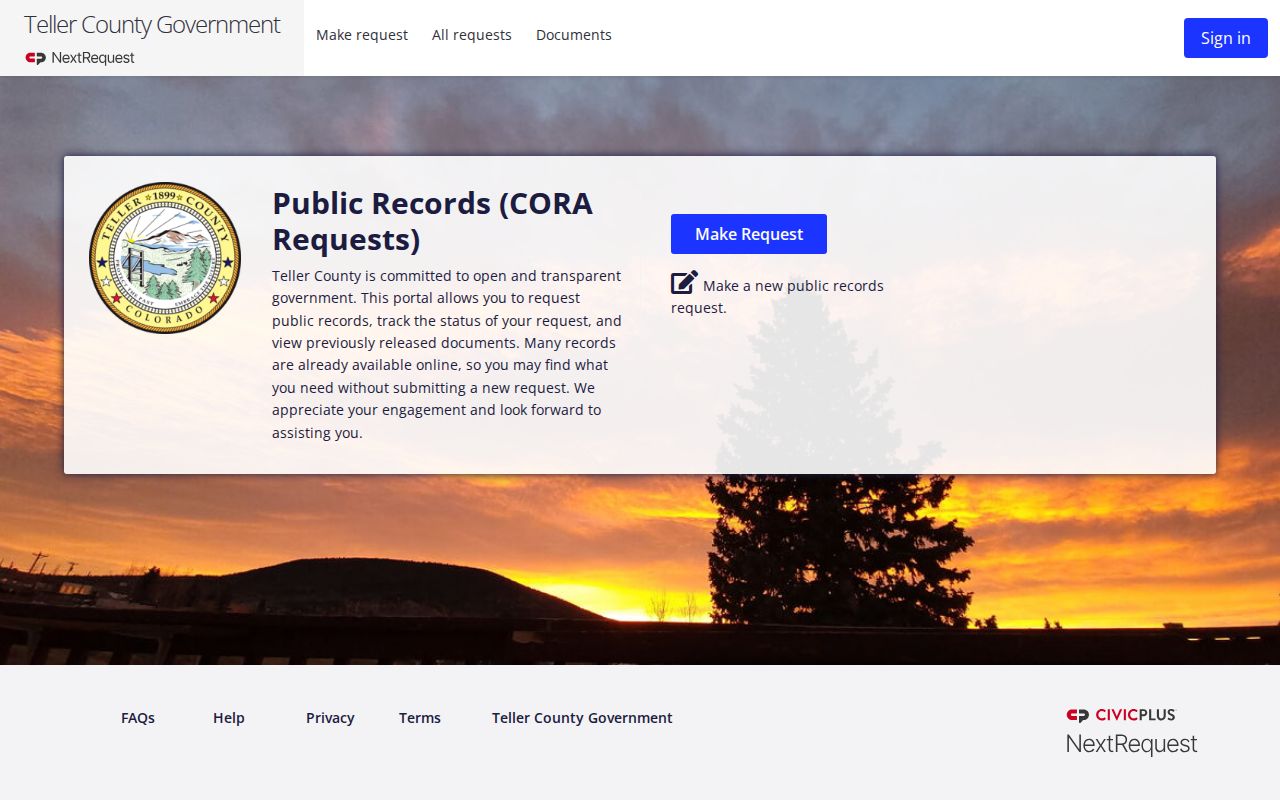
Current warrant status still comes from the issuing court or an authorized law-enforcement custodian in Teller County. The local court request page offers a second route.
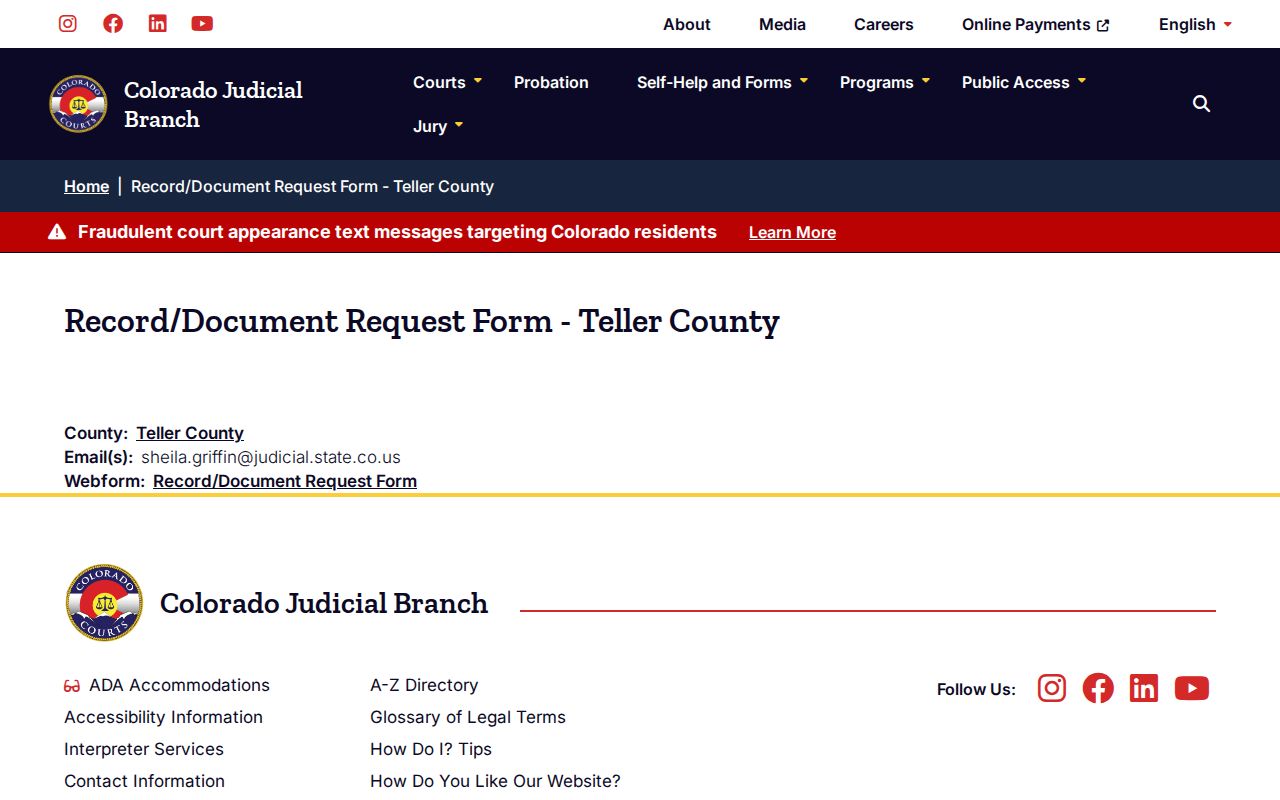
Use it when the docket gives a case lead but not the needed file.
Teller Court Request Details
Start with the state court form. It asks for your contact details, the county, case number and type, the year, your date of birth, party facts, and the documents you want. The court's usual response point is three business days. Workload and access restrictions can stretch that, and the form itself shows each identification field it requires for a Teller County request.
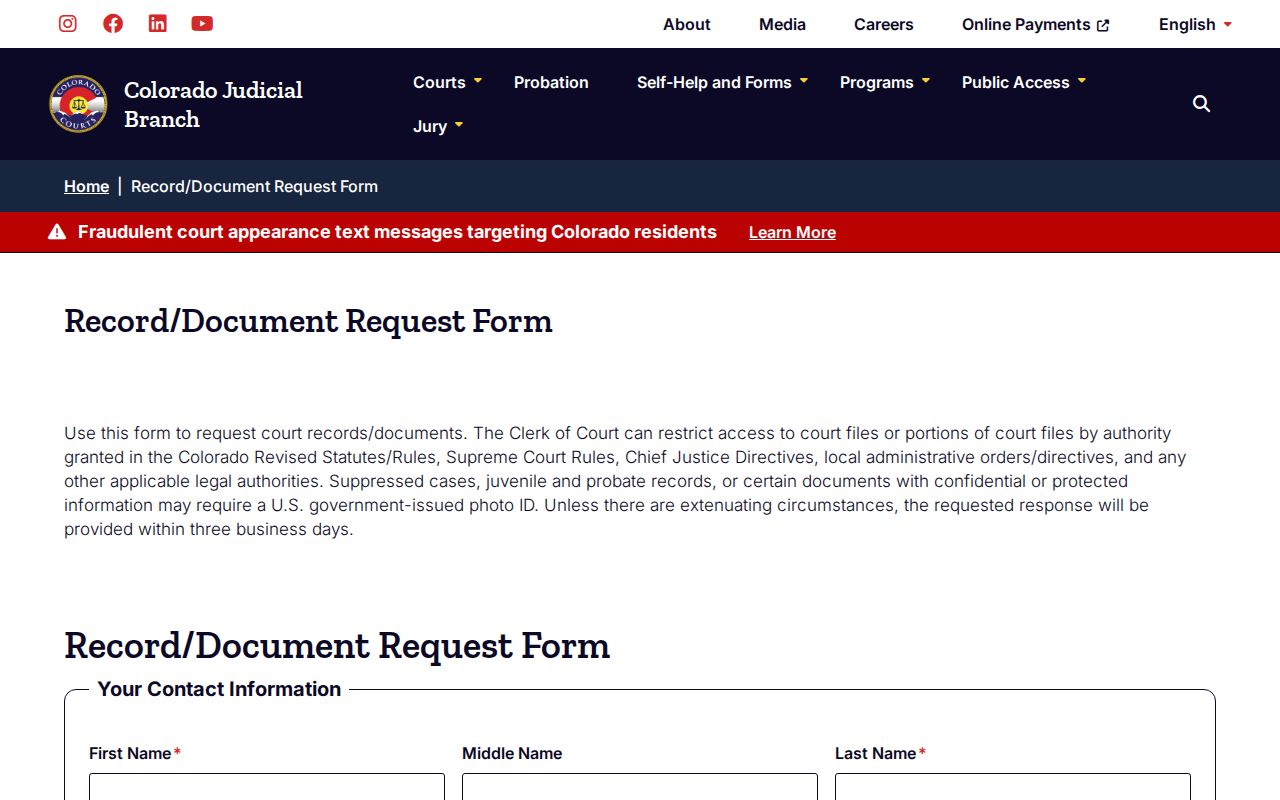
Exact details keep your Teller County file apart from someone with a similar name. Save the submission number and the written reply. If the answer points to a different office, send a focused request there and cite the case number, court, and exact status fields you seek.
Access and Restricted Teller Warrants
Colorado court access runs under Chief Justice Directive 05-01. Teller County records may also fall under the Colorado Open Records Act, while sheriff criminal justice records answer to the Colorado Criminal Justice Records Act. None of that makes everything public. Warrant affidavits, juvenile cases, and open investigations can stay closed.
Key rules:
Sealed records do not appear in a routine search. Juvenile files may remain restricted. A warrant may be withheld before service or during an active investigation.
The official access guide explains those limits for Teller County, and the courthouse screen adds the clerk route and a failure-to-appear warning.
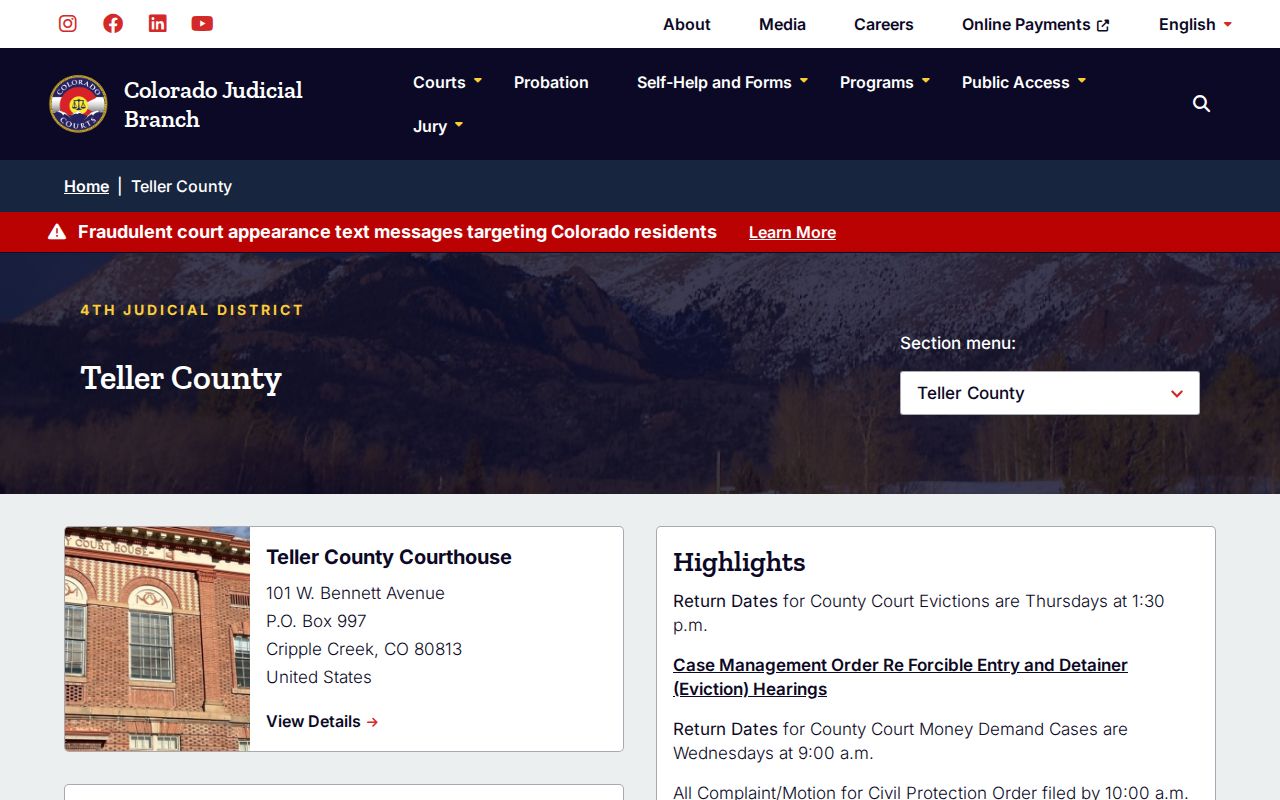
Verify a state case through that official court channel before acting.