
Active Warrants in Teller County
An active warrant is simply one the issuing court has not closed out. Nobody has recorded service, a recall, or a quash yet. People say "outstanding" to mean the same thing in everyday conversation, and the status can shift the moment an arrest happens, a person walks in voluntarily, or a judge signs an order. A pending case alone does not mean a warrant is still live, and an old docket entry can linger long after service. In Teller County, state matters go through the Colorado District Court, Fourth Judicial District, Teller County, and Teller County Court, while each municipal court keeps its own city cases. The Teller County Sheriff's Office serves process and runs the detention facility, but its official website publishes no complete warrant database. That split makes the issuing clerk the best source for current court status.
No Teller County Warrant Roster
The official Teller County Sheriff's Office website offers contact details, detention information, records help, operations pages, an inmate search, and crime-report resources. None of it is a full list of unserved warrants. The sheriff's page is a routing tool for who to call, not a warrant-list interface. Ring the published non-emergency line, 719-687-9652, and ask which court or detention contact can confirm a warrant inquiry on a named person.
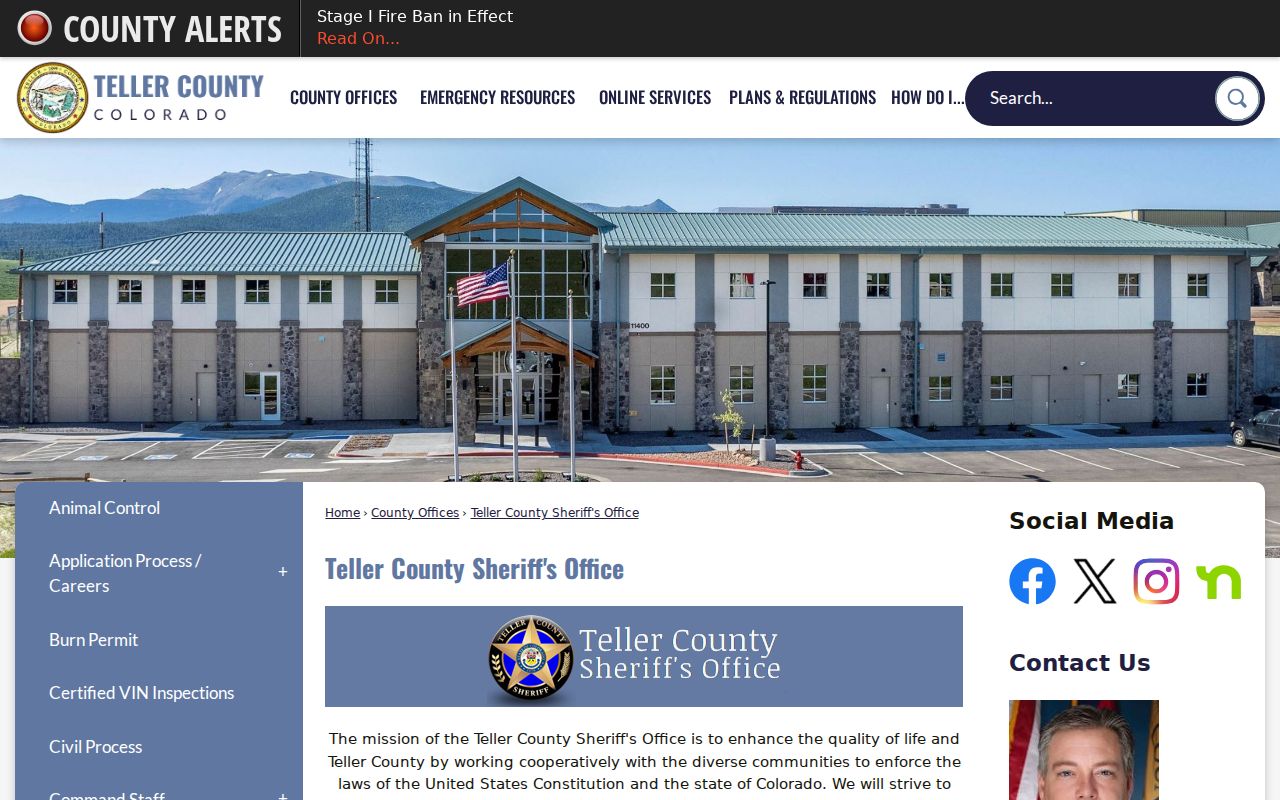
Teller County posts no public warrant roster, so a warrant check here starts with a call to the sheriff or the issuing court.
How the Teller County Active Warrant List Works
Teller County has no official active warrant list with a public refresh schedule. The nearest state tool is the Colorado Judicial docket search. It lists hearings, parties, case numbers, dates, locations, and labels such as "Appearance on Arrest Warrant." That can flag a case worth confirming with the clerk. Remember, though, that a docket is a schedule. It is not a live inventory of outstanding warrants. A name can be missing for many reasons: the warrant is new, sealed, tied to a protected juvenile matter, held by a municipal court, or simply not linked to a hearing in the date range you chose. A served or recalled warrant can also leave case activity behind. With no published update cadence, a negative Teller County search settles nothing.
Key point: Absence from the docket, jail roster, or weekly reports is not proof that Teller County has cleared a warrant.
Teller County Docket to Clerk
For a state case, run the docket as a first pass. Set the county to Teller. Search by exact name or case number, and note the controls that split the four-digit year from the sequence. Court type, division, date, date range, case class, party type, and attorney fields all narrow the results. There is no public filter for active status, bond amount, warrant type, or date of birth. The official docket interface displays those search controls rather than any person's result. Write down the case number, court, division, hearing type, and next date. Then call the Teller County Clerk of Court at 719-689-7360. Ask the clerk whether the warrant is active, what type it is, whether bond is set, and whether the Teller County court requires an appearance or a motion.
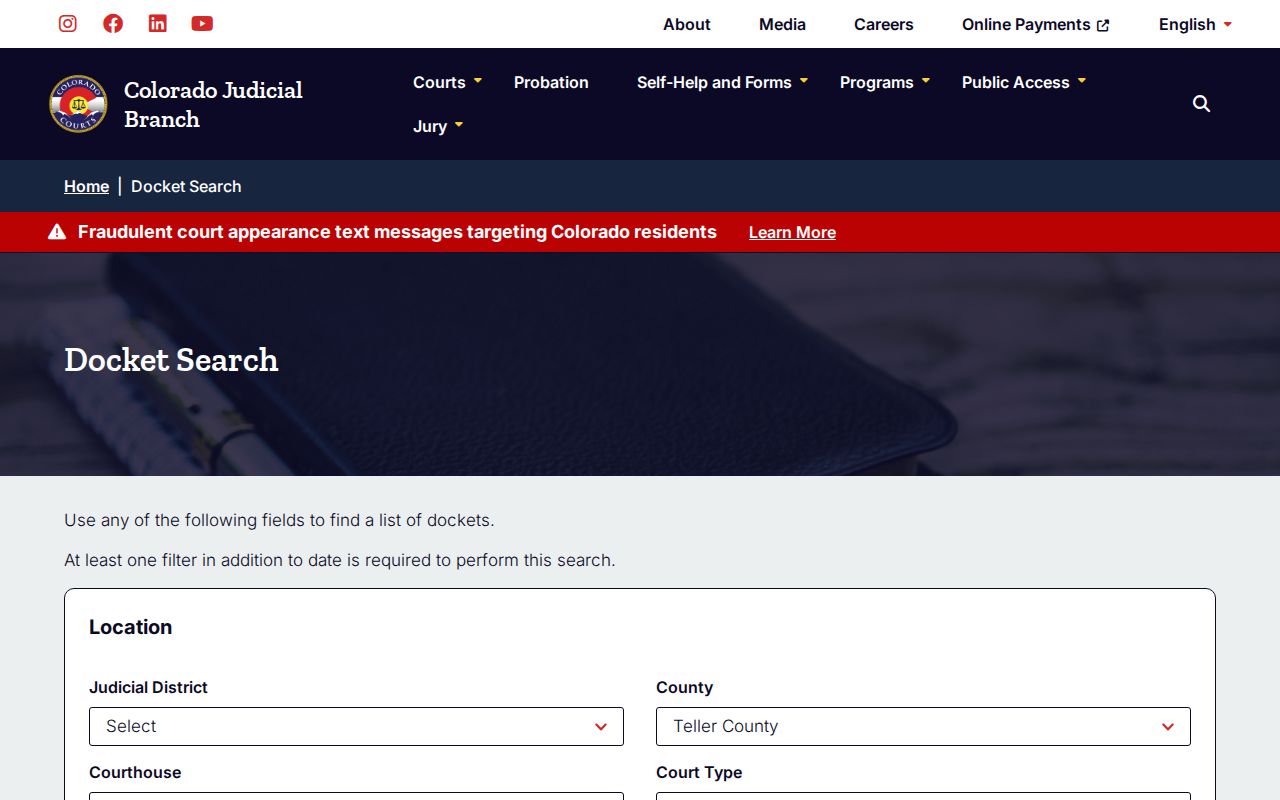
The county-filtered docket is free. Its public data is not the official court record, so the Teller County clerk's word settles warrant status.
What an Active Warrant Shows
A warrant often holds more than a docket row shows. What gets released depends on the office and the case. The docket mainly carries scheduling and case data, while the Teller County clerk or sheriff can confirm status and bond details that never appear online.
| Case number | A year, case class, and sequence such as 2026CR123, which is a format example only. |
|---|---|
| Issuing court | The state District or County Court, or a Teller County municipal court. |
| Warrant basis | An alleged offense, missed appearance, contempt, or other lawful ground. |
| Status | Active, served, recalled, or quashed when the responsible office can release it. |
| Bond | Amount and type, including cash, surety, personal recognizance, or no-bond terms. |
| Return data | Service information recorded after an officer carries out the warrant. |
Teller County publishes no local warrant-number pattern and no status-code dictionary. An undefined code proves nothing about an active warrant, so do not read status into it.
Teller County Custody Is Different
The Detentions Facility page links an inmate search and lists 719-687-7770 for detainee information. A custody lookup can tell a relative whether someone is held right now. It cannot show every person with an unserved warrant. Nor can it establish that someone outside the jail has no active warrant. The two searches answer different questions. A person may be booked after a warrant is served while the case stays open, and another may have an outstanding warrant with no custody entry because no arrest has happened yet. For bond or release questions, call the jail. To seek a recall, contact the issuing court, not the Teller County jail.
| Source | What It Shows | What It Cannot Prove |
|---|---|---|
| Jail search | Current custody | No unserved warrant |
| Court docket | Hearings and case activity | Complete warrant status |
| Issuing clerk | Official court status | Sheriff intake timing |
Most-Wanted Lists and Warrant Roundups
Teller County has no sheriff most-wanted roster, no Crime Stoppers list, no warrant roundup, and no amnesty event. Weekly sheriff crime reports may note an arrest on a failure-to-appear warrant. Treat those as incident summaries only. They are not a live Teller County warrant list. A most-wanted program is an agency-selected public-safety list, never the full body of active warrants. Watch the sheriff homepage for current announcements, and see the Teller County most-wanted reference for how these channels differ.
Source rule: Use official agency announcements only. For emergencies call 911; use 719-687-9652 for non-emergency sheriff routing.
Teller County City-Court Gap
A Teller County warrant might not live where you expect. The county's cities each run their own municipal courts, so a traffic ticket written inside city limits may never touch the state docket. Woodland Park hears charter, ordinance, traffic, and municipal criminal matters. Cripple Creek's police file some citations in municipal court and others in Teller County Combined Courts. Victor takes municipal-code summonses written by the sheriff. Green Mountain Falls keeps its own court calendar and town-code process. Call whichever court the ticket names: Woodland Park at 719-687-5207, Cripple Creek at 719-689-2502, Victor at 719-689-2284. For Green Mountain Falls, use the current town clerk contact, since the town lists no dedicated warrant line. Ask whether the case is municipal or state, whether a warrant is active, and what the judge needs for a reset or recall. Note: A missing state-docket result does not rule out a city warrant.
Request Teller County Warrant Status
When a phone call and a docket check leave the question open, ask for a specific record rather than a broad warrant roster. The sheriff records form covers releasable criminal-justice records. It wants your contact details, the incident, an optional case number, the material requested, and a signature with verification. Expect up to three working days, and longer if review is needed or the file is large or inactive. The Teller County NextRequest portal handles county requests, while court records go through the Teller court document-request channel. Give your full legal name, date of birth when proper, the court, case or ticket number, the missed date, and the exact status or document you need. Fees and legal limits may apply. Sealed cases, juvenile files, protected data, and active-investigation records can stay restricted under the Colorado Criminal Justice Records Act and court access rules.
If Your Name Is on the List
Found your name? Confirm the entry with the issuing court first. Get the case number, the warrant type, whether it is active or recalled, the bond type and amount, the next date, and safe reporting instructions. A lawyer can seek a recall or quash order for a bench warrant or set up a voluntary appearance. The sheriff cannot cancel a judge-issued warrant just because a caller disputes it. If surrender or arrest seems likely, call detention about intake and bond. Teller County's bond-rights sheet says bond can be posted through the sheriff 24 hours a day by authorized methods. Release does not end the case. Keep the bond papers, the new date, the payment receipt, or the recall order, then confirm the entry with the clerk. Follow the home-page resolution steps or the court-controlled path for Teller County bench warrants.
Important: Speak with a lawyer before surrendering. An active warrant can result in arrest during contact with law enforcement.